A move-in inspection is most useful when it records the condition of the property before everyday use hides the difference between an existing defect and a new one. Focus first on safety, water, cooling and access; cosmetic finishing can follow.
Start with AC operation
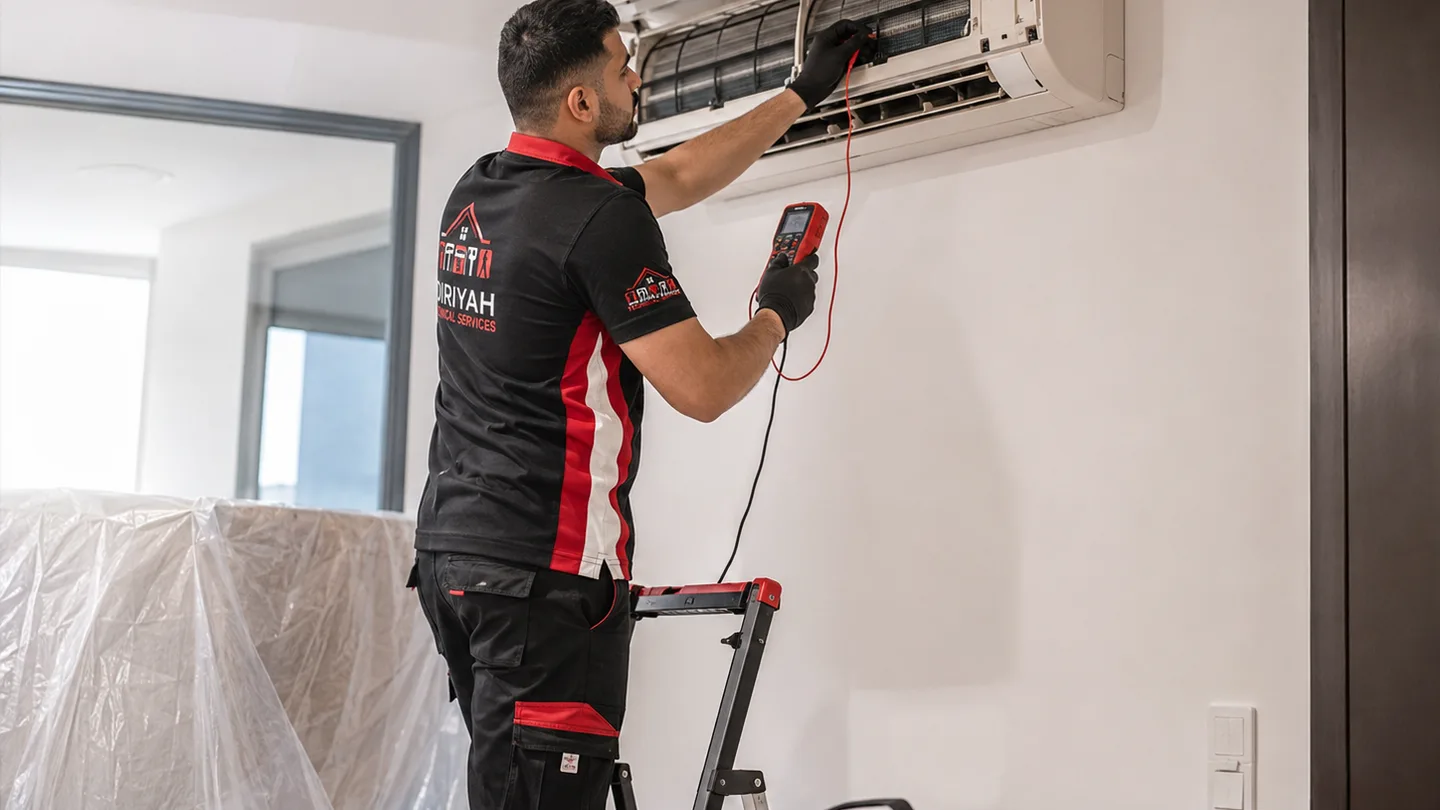
Run each accessible AC zone and note whether it starts, cools evenly, leaks, makes unusual noise or has weak airflow. Check for visible staining around indoor units or vents without opening electrical or refrigerant components. Record which room and unit show the symptom. If cooling is poor, use the AC Services page or the AC not cooling guide.
Check plumbing fixtures and drainage
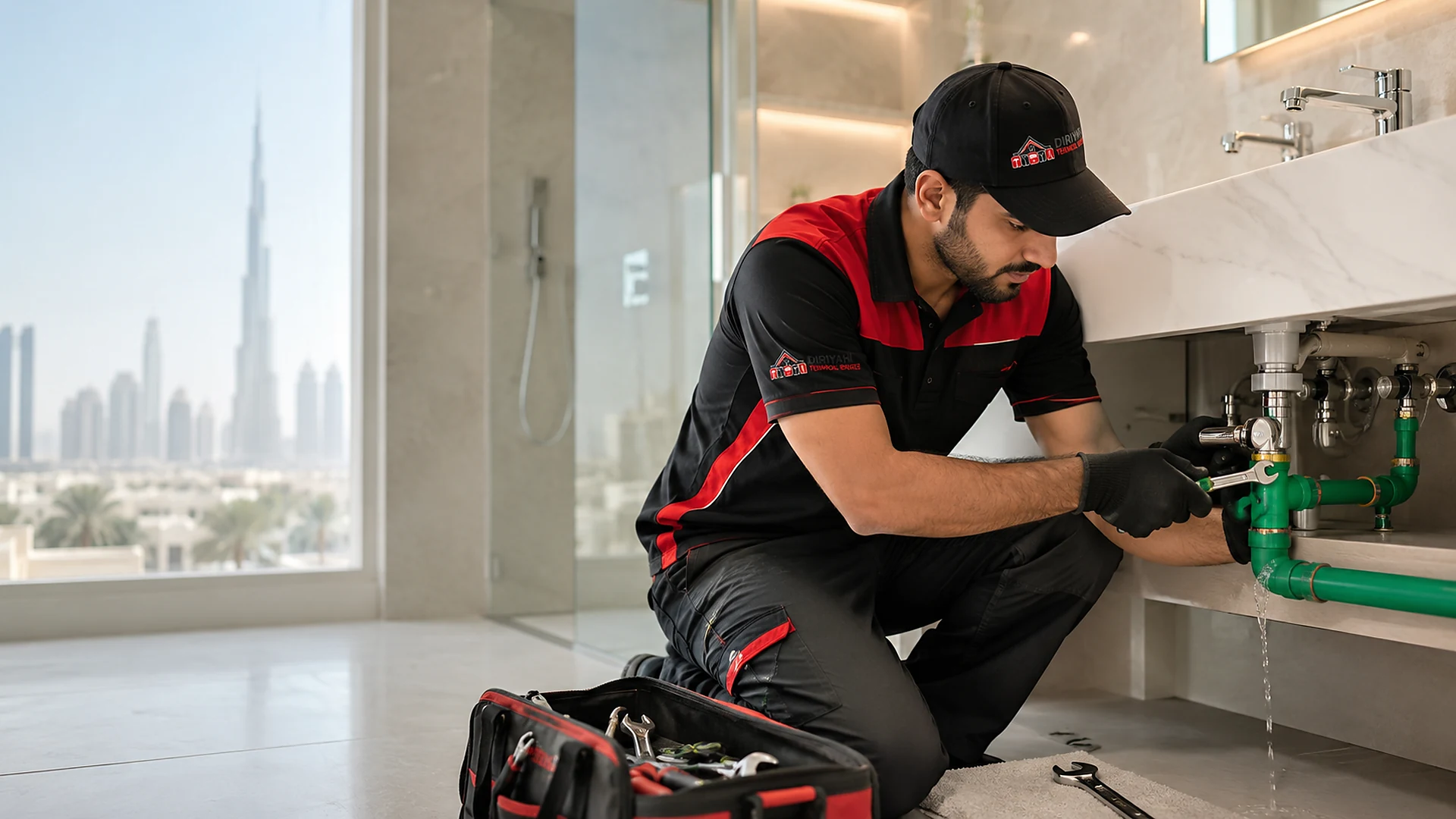
Look under accessible sinks, around toilets, water-heater connections and visible pipework for active leakage. Run taps and showers long enough to observe drainage and note slow fixtures, gurgling or backup. In villas, include accessible tank, pump and external tap areas. For warning signs around pressure systems, see water tanks and pumps.
Check electrical accessories safely
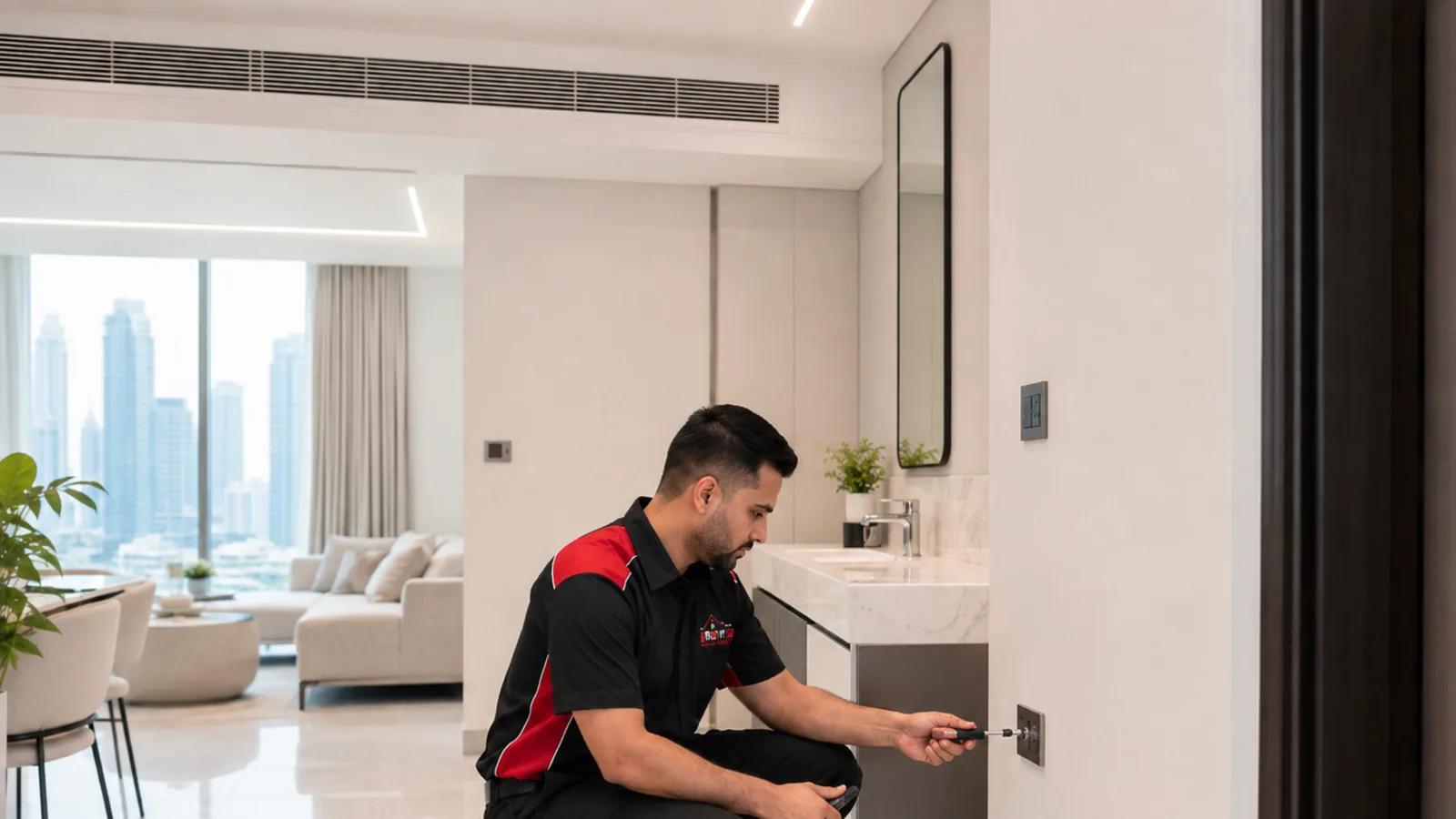
Note damaged sockets, switches, lights that do not operate and any circuit that repeatedly trips. Do not remove covers or repeatedly reset protection. If the distribution panel shows heat, smell, noise or visible damage, keep clear and request Electrical Services.
Record walls, ceilings, floors and joinery
Photograph existing cracks, stains, loose tiles, damaged paint, wallpaper edges, swollen cabinetry, door alignment and flooring defects. Cosmetic issues can reveal earlier moisture or impact damage, so avoid immediate patching when the cause is uncertain. Connected services include plaster, painting, tiling and carpentry.
Understand building and community access
For apartments, confirm parking, service-lift use, loading access and building-management rules before arranging work. For villas and gated communities, share security or gate requirements, external access and any roof or plant-area restrictions. The Service Areas directory helps you find your community and available local information.
Create a priority list rather than one long snag list
Put active leaks, electrical safety concerns and failed cooling at the top. Next, group functional repairs such as blocked drains, faulty fixtures or damaged fittings. Cosmetic finishing can then be planned once technical causes are stable. A structured list helps the correct trade attend first and reduces unnecessary repeat visits.
Keep the record after move-in
Save the dated photos and notes. If a symptom returns later, you can show when it first appeared and what changed. For ongoing planning, use the monthly and seasonal maintenance checklist or contact Diriyah with the exact property and issue.