A hot socket, burning odour, discoloration or crackling sound deserves attention because heat can be a symptom of a poor connection, damaged accessory, overloaded point, connected-equipment fault or another electrical condition. The priority is safe isolation and diagnosis—not hiding the mark or continuing to use the outlet.
Warning signs that should change normal use
Stop using an accessory if it is unusually hot, visibly melted, scorched, loose, sparking or producing a persistent burning smell. Buzzing or crackling that is clearly coming from a socket, switch or electrical panel should also be reported. If smoke or fire is present, follow emergency procedures and contact the appropriate emergency service.
Do not paint over or replace the faceplate before diagnosis
Discoloration around an electrical point can be cosmetic, but heat damage should be treated as evidence until the condition is checked. Replacing only a visible cover can hide a poor terminal, damaged cable or connected-load problem. The electrician should inspect and test the approved accessible components first.
What should you record?
Note when the symptom appears, what equipment is connected, whether the accessory has recently been changed and whether the breaker has also tripped. If the smell occurs only when a particular appliance is used, say so. A safe photo of the closed accessory and surrounding area can be useful.
Moisture changes the risk
Water from plumbing or AC drainage near sockets, switches, lighting or distribution equipment requires extra caution. Do not handle wet electrical accessories. Control the water source only where that can be done without entering an electrical hazard and tell both the electrician and the relevant maintenance trade what happened.
Managed buildings and villas need different access preparation
In a tower, the affected supply may sit within tenant, landlord or building-management responsibilities, and access procedures can matter. Villas can include outdoor sockets, pumps, gates, landscape circuits and AC equipment exposed to heat, dust or moisture. Share the property type and exact location before the visit.
When to book an electrician
Book Electrical Services when heat, burning smell, repeated trips, damaged accessories, unexplained loss of power or abnormal electrical noise needs diagnosis. If active leakage is involved, connect the request to Plumbing Services or AC Services as appropriate, but do not assume either trade replaces electrical safety checks.
What the visit should clarify
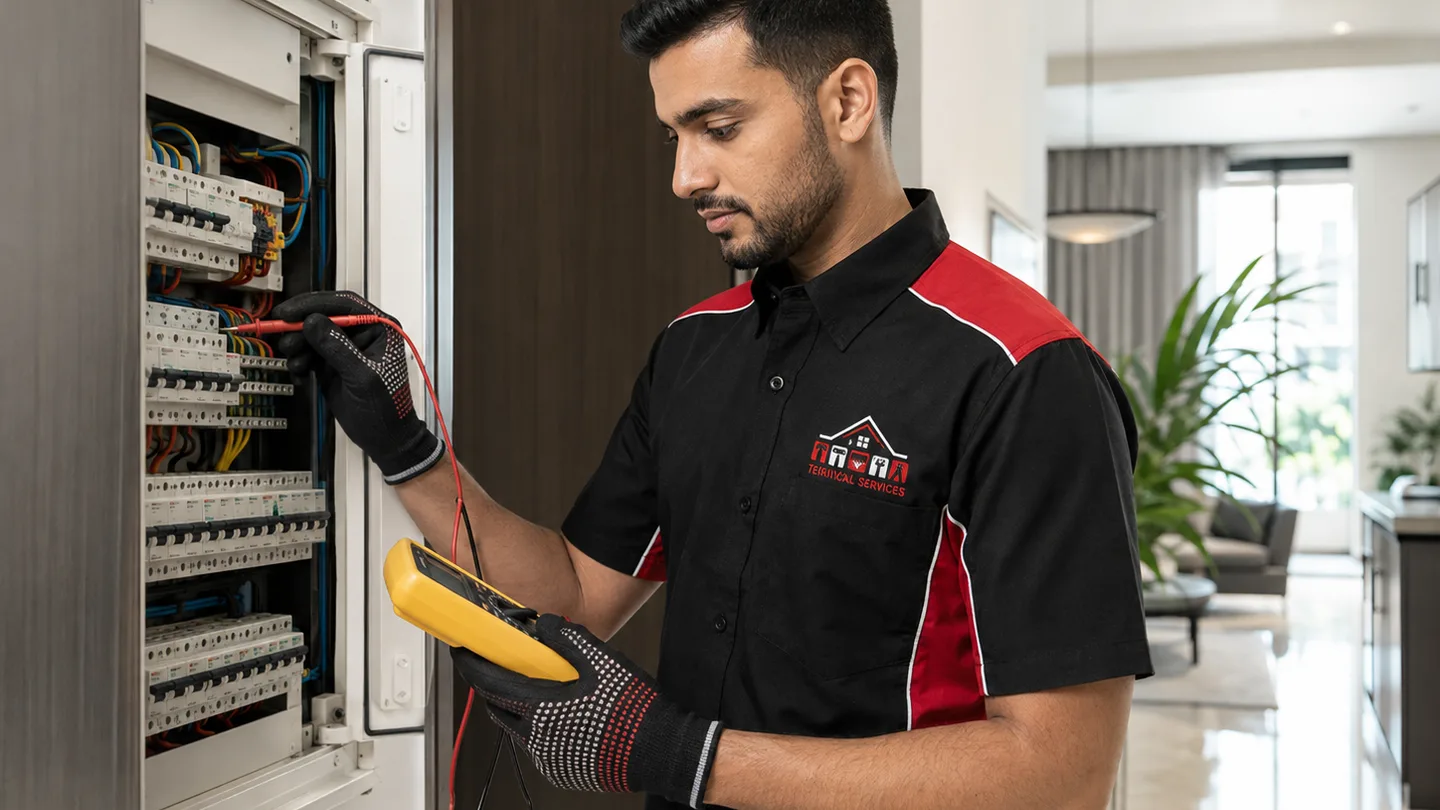
The electrician may need to inspect the accessory, circuit protection, connected load and accessible wiring condition using appropriate test equipment. Any replacement, rewiring or additional access should be explained before it is added to the approved scope.